SUGUD Organization
When a Child’s Story Becomes a Question of Justice
Sugud was a child at the centre of a family justice system that was supposed to protect her.
Instead, her case became the starting point of a much larger inquiry into what happens when procedural authority, institutional decision-making, and the lived reality of a child begin to diverge.
What began as a family case developed into years of documented proceedings involving courts, youth welfare authorities, procedural representatives, experts, lawyers, and other institutional actors. Across that record emerged serious questions concerning judicial scrutiny, procedural transparency, institutional accountability, proportionality, and the effectiveness of safeguards intended to protect children and family life.
Throughout those years, decisions profoundly affecting Sugud’s relationship with her father and siblings were repeatedly justified in the language of the “best interests of the child.”
Yet the most consequential development did not come through a court.
It did not come through the Youth Welfare Office.
It did not come through an expert assessment.
It came through a telephone call.
The father was contacted and asked to come to a hospital because Sugud’s mother had entered a coma and someone needed to take care of his daughter.
Only then did he learn that the mother had reportedly been living with a serious cancer diagnosis for a prolonged period.
Later documentation and statements raised an even more disturbing question: to what extent had information concerning the seriousness of the mother’s condition already been known within the institutional environment surrounding the case and, if it was known, what protective reassessment followed?
That question could not be separated from the years that preceded it.
The family had remained divided. Parental and sibling relationships had been restricted. Institutional interventions and legal proceedings had continued. Yet fundamental questions concerning the child’s actual long-term welfare remained unresolved.
And ultimately, Sugud returned to her father and siblings not through the carefully constructed mechanisms that had governed her life for years, but amid a medical emergency.
That moment changed the meaning of the case.
It was no longer sufficient to ask whether individual decisions had been procedurally or legally possible.
A deeper question had to be asked:
Did the system entrusted with protecting the child actually understand and protect the child it was making decisions about?
From that question, SUGUD — Separated Unjustly Guarded Under Dictates — was born.
SUGUD exists to document institutional conduct through evidence rather than rhetoric; to reconstruct events through official records rather than assumptions; and to examine whether the exercise of public authority remains consistent with the rule of law, fundamental rights, procedural fairness, proportionality, and meaningful accountability.
Its purpose is not revenge.
Nor is it hostility toward judges, social workers, experts, lawyers, or public institutions.
On the contrary, it is precisely because these institutions exercise extraordinary power over children and families that their decisions must remain transparent, reviewable, evidence-based, proportionate, and accountable.
Sugud’s story therefore stands for something larger than one child, one father, one court, or one family.
It asks what happens when procedures designed to protect human beings begin to overshadow the human beings themselves.
It asks what remains of legal safeguards when they exist on paper but fail to produce effective protection in practice.
And it asks perhaps the simplest and most difficult question of all:
Who protects the child when the system responsible for protecting the child itself requires scrutiny?
There are many courts in the world.
Justice is something more demanding.
SUGUD was created to document the distance between the two and to work toward closing it.
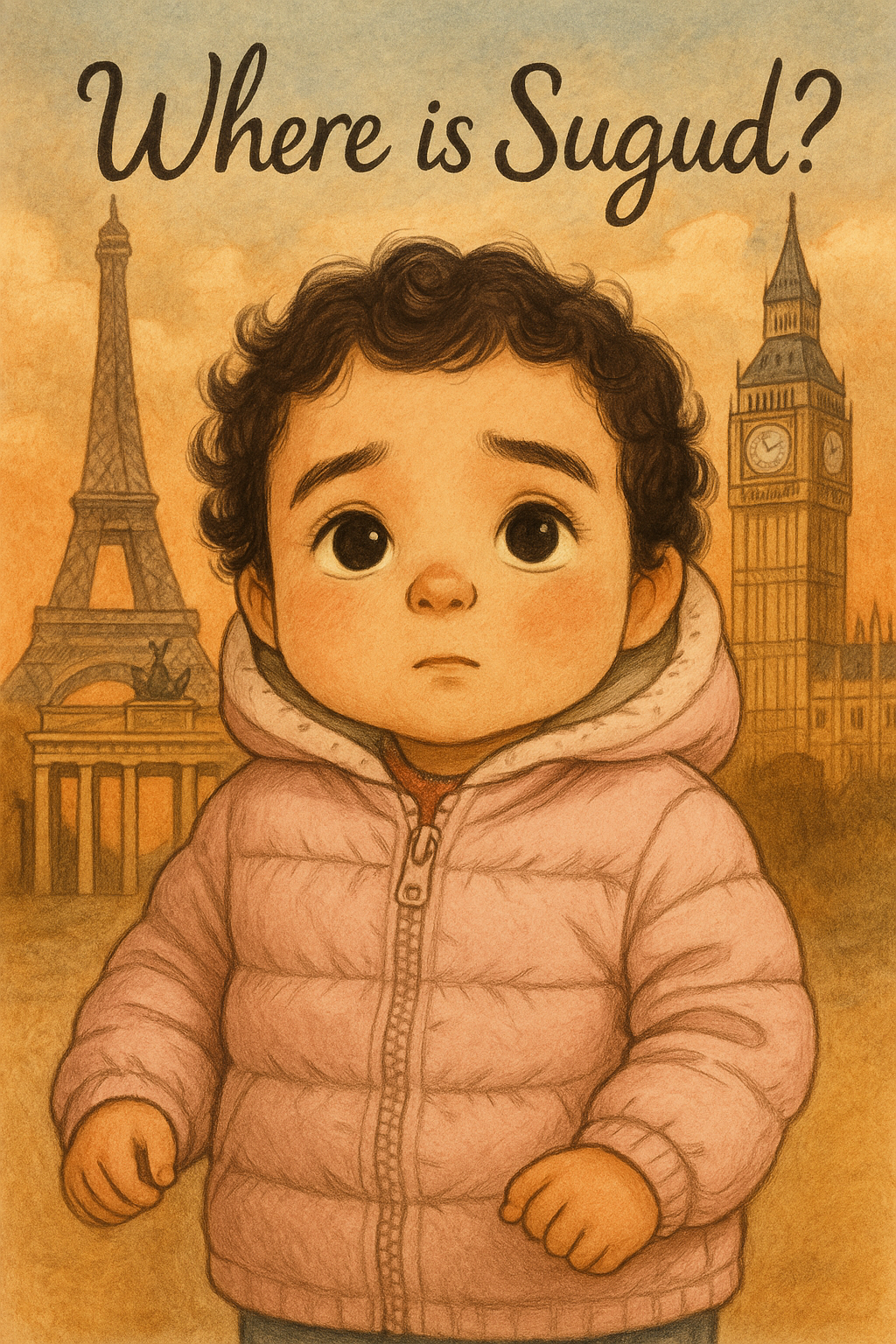

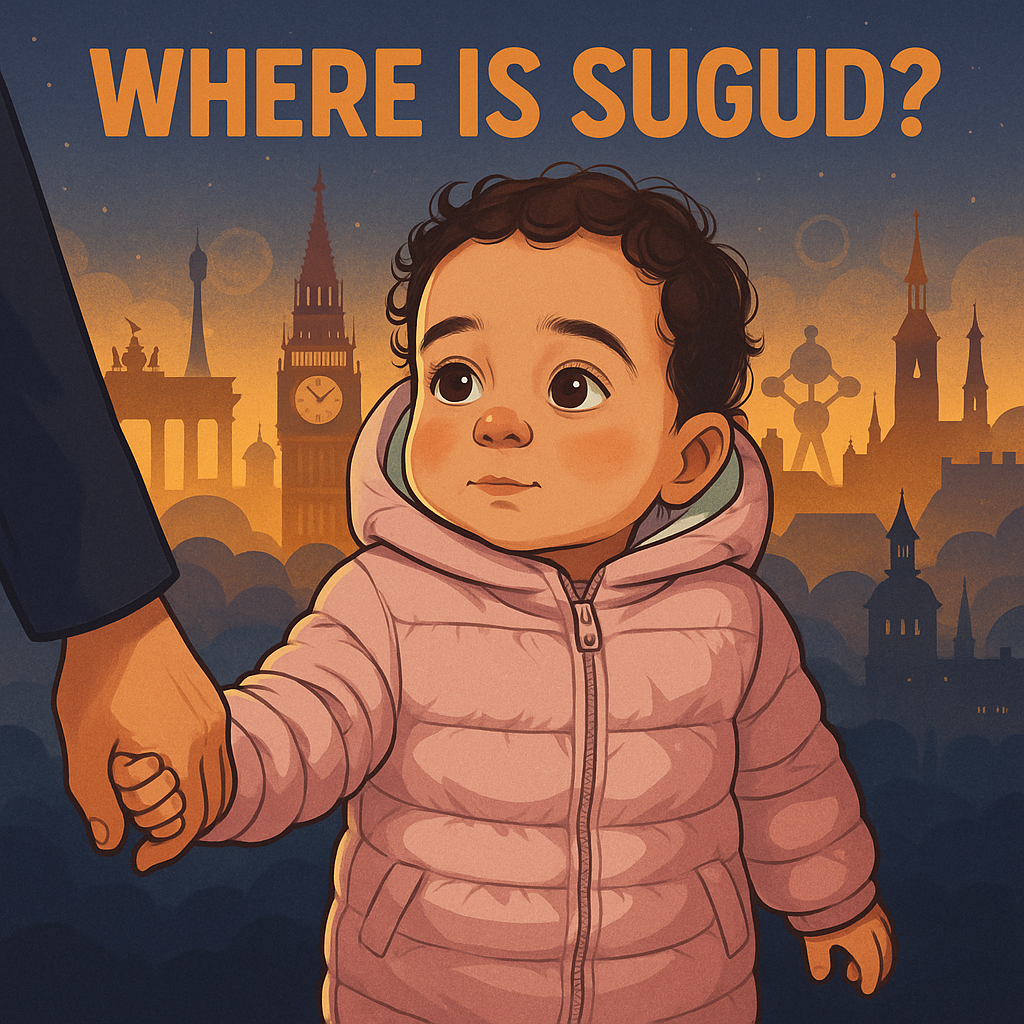
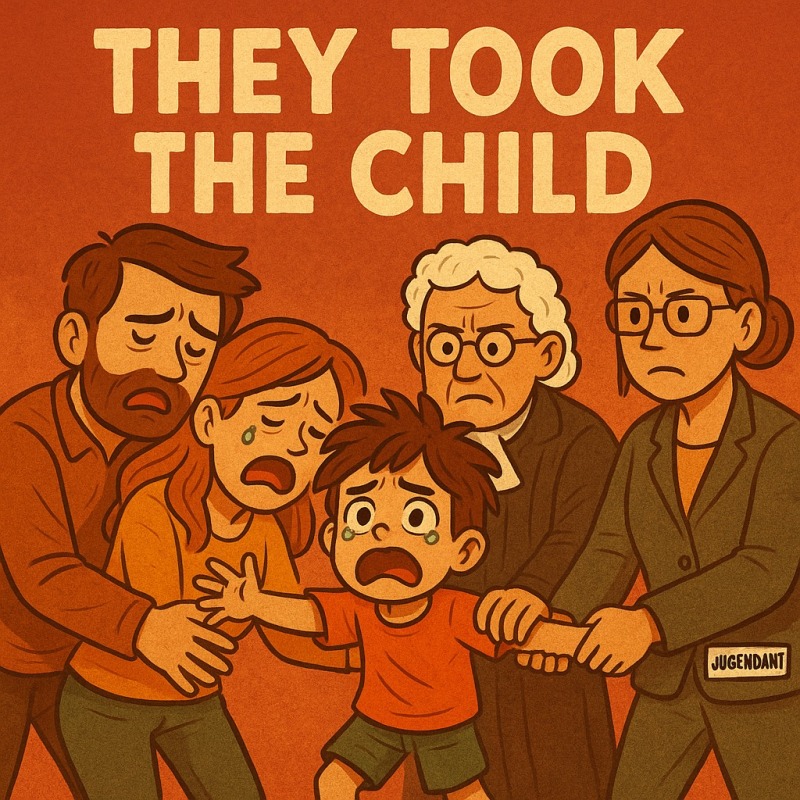

Do German judges deny justice?
Or is justice being tested?
 March 28–29, 2026 United Nations Palace – Geneva
Together we stand
to stop the “Pizza Laws”
that slice families apart.
Families are not pieces.
Children are not portions.
Justice must unite — not divide.
Geneva, see us. Hear us.
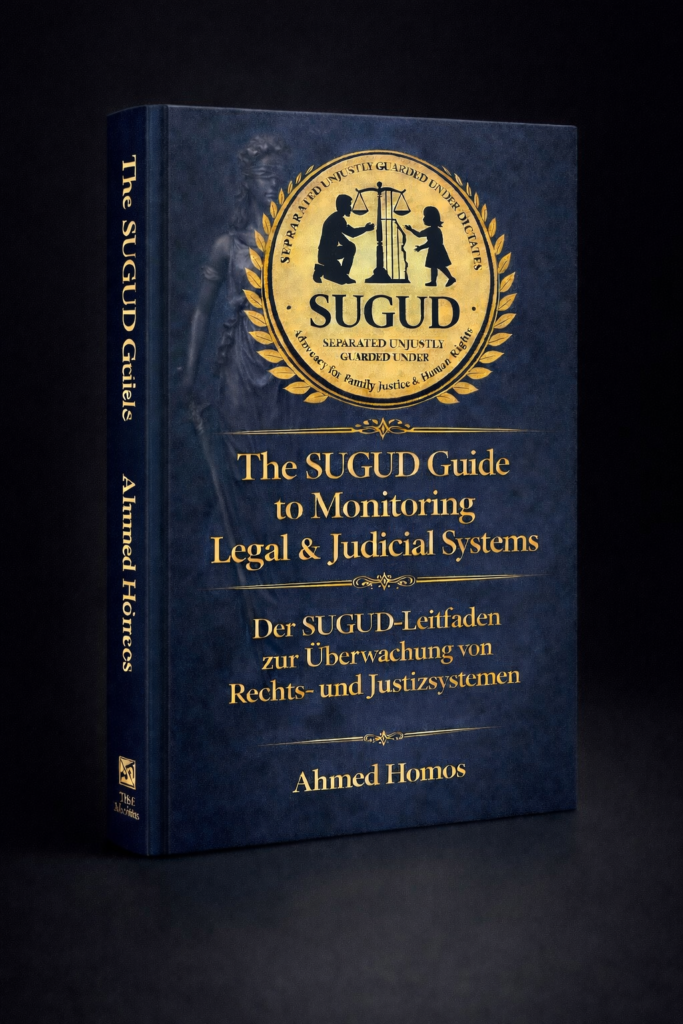
Something powerful is coming.
A groundbreaking bilingual book on justice, rights, and civic oversight is about to be released.
The SUGUD Guide to Monitoring Legal & Judicial Systems
A book that challenges silence, exposes procedural injustice, and turns observation into accountability.
Coming soon. Be ready.
28.03.2026
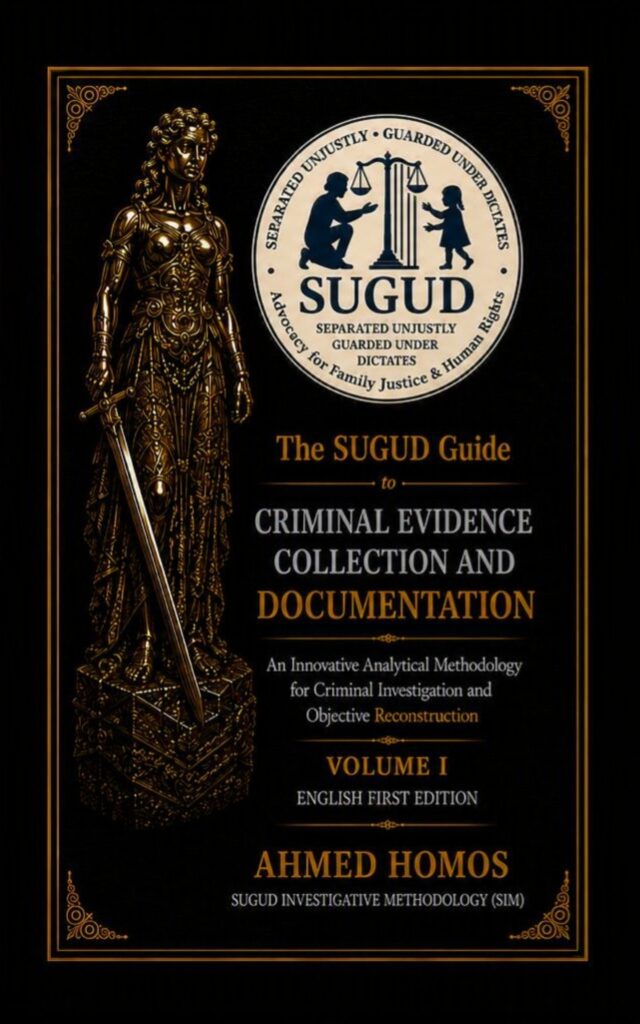
🚨 Coming July 05, 2026
A new standard for criminal investigation begins.
The SUGUD Guide to Criminal Evidence Collection and Documentation introduces the SUGUD Investigative Methodology (SIM) a practical framework for evidence collection, documentation, and objective reconstruction.
Available on Amazon • July 05, 2026
Observe.Document. Reconstruct.Observe.Document. Reconstruct. Account.That is SUGUD.Observe.Document. Reconstruct.Observe.Document
That is SUGUD.
Coming soon. Be ready.

The attempt to obstruct the publication of The SUGUD Guide, scheduled for release on 28 March on international platforms, has made free distribution and direct circulation to activists the only viable alternative.
The purpose of this book has never been commercial profit as much as the sharing of knowledge, documentation, and awareness. Since the pre-order links on international platforms have been blocked, we have decided that, should the book fail to appear on 28 March, copies of the book files will be sent to selected parties who will undertake its distribution and wider circulation.
With regards.
📻 SUGUD RADIO — NOW ON A NEW CHANNEL!
A new channel. A stronger voice. The same mission.
SUGUD RADIO is now broadcasting from its new channel, bringing you music, stories, voices, and messages that matter 24 hours a day, 7 days a week.
🎙️ SUGUD RADIO
Voices for Families. Voices for Human Rights.
Stay tuned. Keep listening. The voice continues.
Our Human Rights Journalism & Legal Commentary
You will find all journalistic articles written in German and English on family justice in Germany published on Medium at the following link…
